
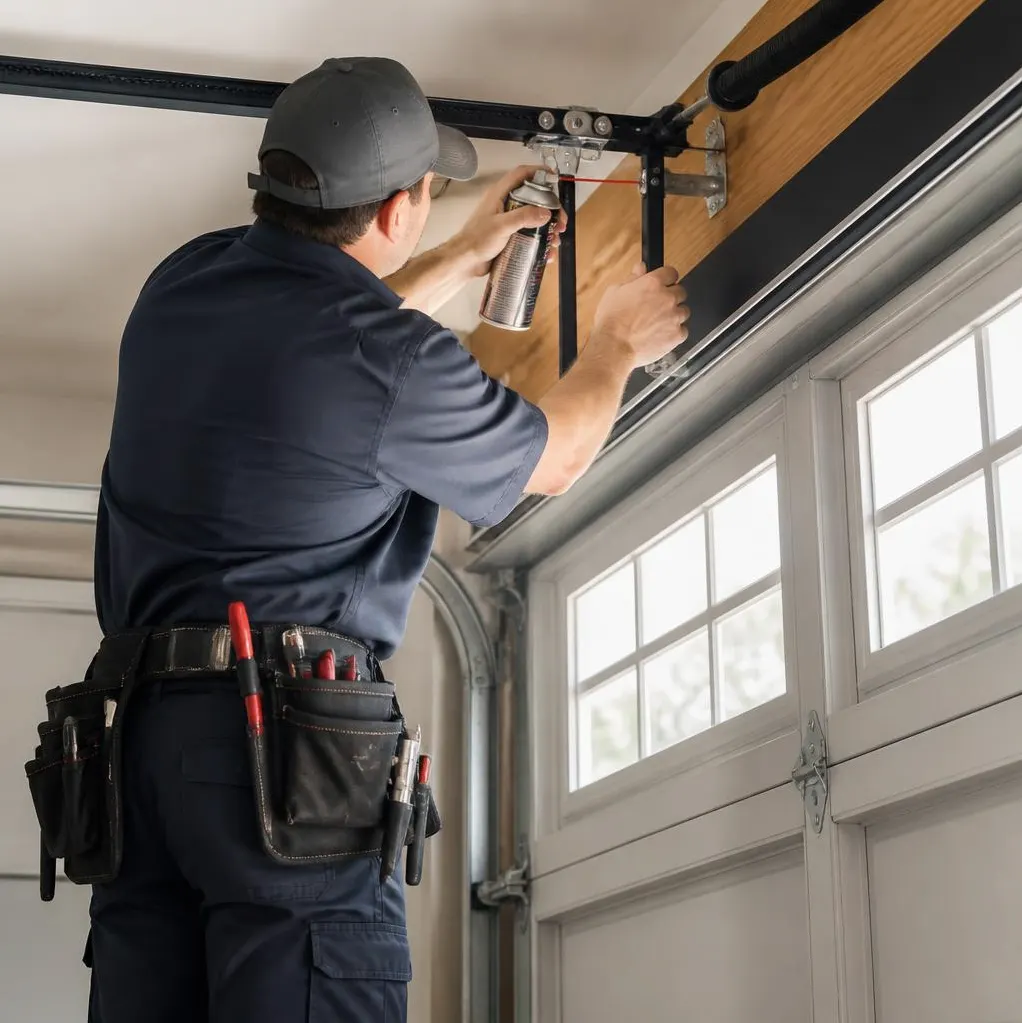
What a technician sees on these calls
It's usually the same setup: a door from the 90s or earlier that still goes up and down every day, a homeowner who's proud it's never needed a repair, and a spouse who's nervous about it. The tech pops the garage light on and finds the real story — frayed cables wound loose on the drum, no visible photo-eye sensors near the floor, an opener with a single button and no obvious reversing mechanism, and springs that look original to the house. The door works, but "works" and "safe" aren't the same thing, especially once a door has been cycling through thirty-plus Wisconsin winters.
The retrofits that actually matter
Not everything about an old door needs replacing, but a few things are worth taking seriously because they're the parts that fail suddenly, not gradually.
- Auto-reverse and photo-eye sensors. Openers built before the early-to-mid 1990s often lack the small photo-eye sensors mounted a few inches above the floor on either side of the track, or any reliable way to reverse if the door hits an obstruction. If your opener doesn't have those sensors, or the door doesn't reverse when something blocks it, this is the single biggest upgrade to make. A new opener with modern safety reversal is not expensive insurance against a door closing on a kid, a pet, or a car bumper.
- Spring containment cables. Torsion springs store a huge amount of tension, and when an old spring snaps, it can send metal flying. A containment cable threaded through the spring keeps a broken spring from becoming a projectile. If your springs are original and uncontained, this is a cheap, fast fix worth doing even if the springs themselves seem fine.
- Frayed or rusted lift cables. These are easy to overlook because they're thin and tucked along the side of the door. Fraying, kinking, or rust spots mean the cable is close to failing, and when it does, the door can drop unevenly or come off track.
- Manual emergency release. Every opener should have a working release cord so the door can be opened by hand during a power outage. On older setups this cord sometimes gets removed, zip-tied out of reach, or simply forgotten. Worth testing now, not during a January outage.
- Finger-pinch protection on panels. Older steel doors, especially ones with simple flat panel seams, can pinch fingers badly between sections. Pinch-resistant panel designs aren't something you retrofit onto an existing door, but it's a legitimate reason to consider replacement if small children are regularly around the door.
What's fine to leave alone
This is usually where the argument actually lives. A lot of what looks "old" on a garage door is cosmetic or simply built differently than modern doors, not unsafe.
- Torsion spring hardware itself, if it's been inspected and isn't rusted, cracked, or visibly stretched, doesn't need to be swapped out just because of its age. Springs are rated for a number of cycles, and plenty of older ones still have life left, especially if they've been kept lubricated.
- Wood or older steel panel doors in good structural condition don't need to be replaced for insulation or style reasons alone. If the door seals well, isn't warped, and opens smoothly, it's doing its job.
- Simple hardware and track that's properly aligned and free of heavy rust is fine to leave as-is. Swapping hardware for the sake of swapping it just introduces new points of failure.
Why the local climate changes the math
Cold matters more here than in milder climates. Once temperatures drop into deep cold, metal contracts, lubricant thickens, and springs under tension behave differently than they do in July — a spring that's been slowly weakening all year is more likely to let go on a frigid morning than a mild one. Road salt tracked in on tires and boots also accelerates corrosion on tracks, hinges, and cables faster than people expect, so anything already showing rust should get attention before winter rather than after. Come spring thaw, mud and meltwater around the door opening can mean debris in the tracks and extra strain on the opener as it fights a sticking door. None of that is a reason to panic about an old door, but it is a reason to deal with worn cables and ungrounded springs now instead of waiting for a cold snap to make the decision for you.
When to call Pleasant Prairie Garage Door
If you're finding frayed cables, an opener with no reversing safety feature, or springs you can't remember ever being replaced, that's the point to call in a technician rather than keep debating it at home. Pleasant Prairie Garage Door handles spring replacement and garage door opener repair & installation regularly on older homes throughout the area, and can tell you plainly which parts of your specific door are worth retrofitting and which ones have years left in them. A preventive maintenance visit before winter is also a good way to settle the argument for good — you'll get a straight answer instead of two different guesses.
If you're in Pleasant Prairie, Kenosha, Somers, Bristol, Salem, Paddock Lake, Twin Lakes, or Winthrop Harbor and want an honest read on an older garage door before winter sets in, give Pleasant Prairie Garage Door a call.