
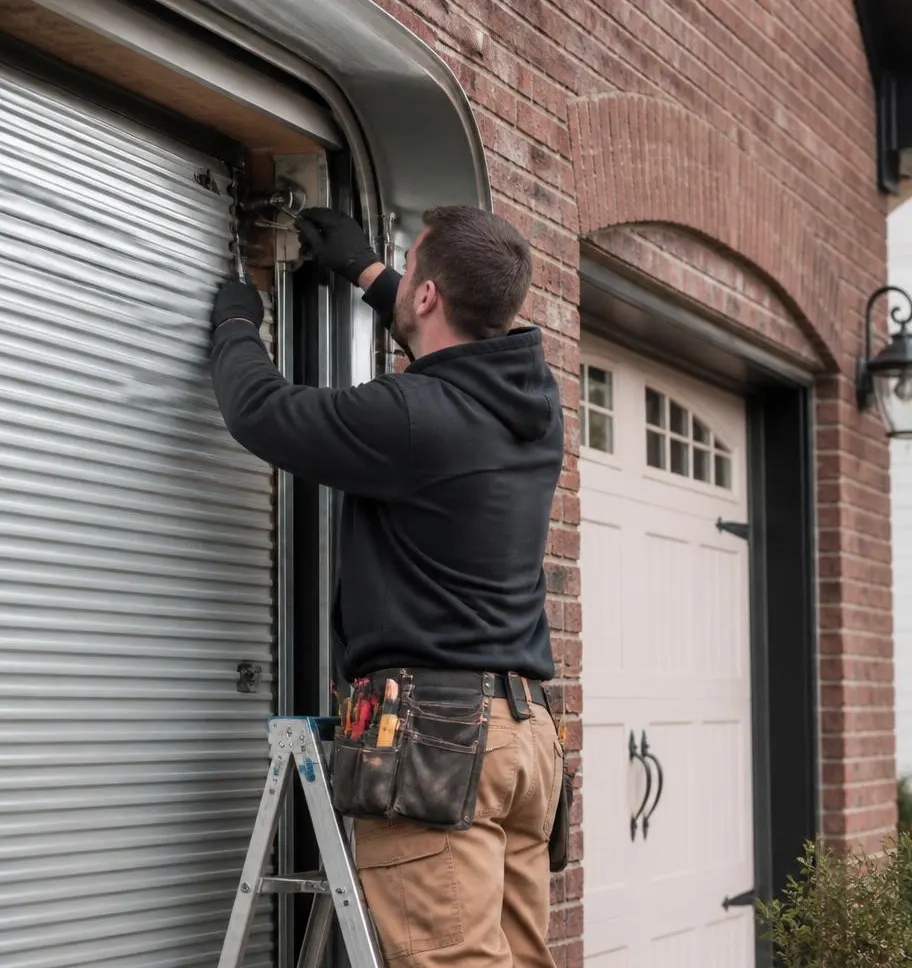
Garage Door Frozen or Sluggish? What to Check Before You Force It
Rule of thumb: if your garage door won't budge on a cold morning, the most likely culprit is ice at the bottom seal, not a broken opener or motor. The exceptions are worth knowing too — sometimes the problem is a spring that's lost tension in the cold, an opener that's misreading resistance as an obstruction, or rollers that have simply gummed up with old grease. Knowing which one you're dealing with saves you from yanking on a door (or an opener) that didn't need to be forced in the first place.
Symptoms to Notice First
- The door won't lift at all, and you can see or hear the bottom seal cracking or tearing as you try.
- The opener motor runs, but the door doesn't move — you'll often hear it humming or clicking without any travel.
- The door lifts a few inches, then stops or reverses, as if something's in the way.
- The door moves, but slower than usual, or makes a dragging, grinding, or squealing sound along the tracks.
- The remote works but the door seems to strain, especially on the first open of the day.
Causes, in the Order a Technician Would Check Them
1. Ice Fusing the Bottom Seal to the Slab
This is the most common issue after a freeze-thaw cycle, which is routine in southeastern Wisconsin once temperatures start dropping below freezing overnight and melting slightly by day. Snowmelt or slush runs under the door, then refreezes overnight, gluing the rubber weatherstrip to the concrete. The fix: never pry the door up with a bar or force it with the opener. Instead, use a hair dryer or heat gun on low to melt the ice along the seal, or break the bond gently with a plastic scraper. Avoid pouring hot water on it — it just refreezes faster and can crack the concrete over time.
2. Ice or Debris in the Tracks
If the seal is clear but the door still drags, check the tracks themselves. Road salt, slush, and sand kicked up from winter driving can collect in the track channel and freeze, especially in a garage that isn't fully sealed from the elements. The fix: wipe the tracks down with a cloth and a bit of warm water, then dry them completely. Check that rollers are still round and spinning freely; a roller with a flat spot from years of wear will catch more easily once ice adds extra resistance.
3. Thickened or Missing Lubricant
Grease and lubricant formulated for warm weather can stiffen up in deep cold, adding drag right at the hinges, rollers, and track where the door needs to move freely. The fix: apply a silicone-based garage door lubricant (not WD-40, which is a solvent and will wash existing lubricant away) to the hinges, rollers, and springs. Do this in fall before the first hard freeze, and again partway through winter if the door starts sounding stiff.
4. Springs Losing Tension in the Cold
Metal contracts as temperatures drop, and torsion and extension springs are no exception. A spring that was properly balanced in October can feel noticeably weaker in January, making the door heavier for the opener to lift and more likely to stall partway up. The fix: this isn't a DIY adjustment — torsion springs are under serious tension and dangerous to tune yourself. A technician can check the balance and recalibrate or replace the spring if it's lost too much strength for the season.
5. Opener Force Settings and Sensors
If the door is encountering extra resistance from ice or stiff rollers, the opener's safety sensors may interpret that as an obstruction and reverse the door automatically. This is the system working as designed, not a malfunction. The fix: clear the actual mechanical issue first (seal, track, lubrication, spring). If the door still won't complete its cycle, check that the photo-eye sensors near the bottom of the tracks aren't fogged or iced over, since condensation here is common when a heated garage meets cold outside air.
When to Call Pleasant Prairie Garage Door
If you've cleared the ice, cleaned the tracks, and lubricated the moving parts and the door is still sluggish or stalling, it's time to get a second opinion. This is especially true if you suspect the springs are the issue — Spring Replacement is not something to troubleshoot alone, given how much force these components hold. We also offer Preventive Maintenance visits before winter really sets in, which catch worn rollers, loose hardware, and weak springs before a hard freeze turns a minor issue into a door that won't open at all.
If your garage door is frozen, dragging, or stalling partway through its cycle, give Pleasant Prairie Garage Door a call. We serve homes and businesses throughout Pleasant Prairie, Kenosha, Somers, Bristol, and the surrounding Kenosha County area, and we're ready to get your door moving smoothly again before the next cold snap.